Traditional Chinese Medicine (TCM)
About Herbs
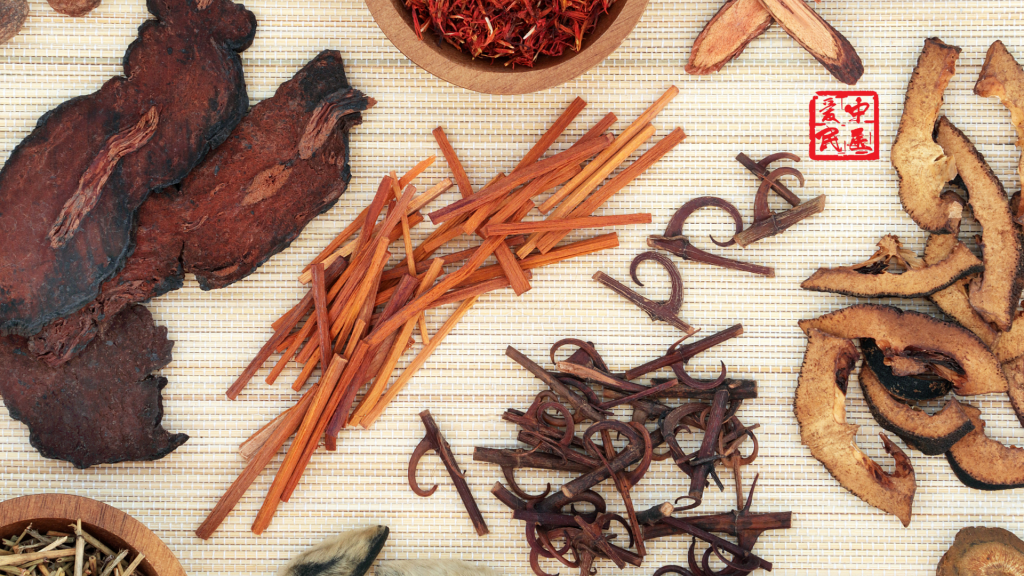
The earliest recorded use of herbs in TCM can be traced back to the “Huangdi Neijing” (The Yellow Emperor’s Classic of Medicine), a text that is approximately 2200 years old. TCM incorporates the use of a variety of plant, mineral, and animal compounds to rectify imbalances and enhance overall health. Instead of using individual herbs, these compounds are often combined into customized formulas tailored to treat a specific individual’s condition.
TCM operates on the belief that each person has a unique bodily constitution, influenced by a variety of factors such as genetics, lifestyle, environment, and medical history. TCM classifies these constitutional types into categories such as Yin deficiency, Yang deficiency, Qi stagnation, Blood insufficiency, among others.
In TCM, it’s understood that an individual’s physical constitution is dynamic and can change over time due to factors like lifestyle, diet, stress, and age. Consequently, herbal prescriptions may need adjustments to align with changes in a person’s constitution and health status. This consideration of an individual’s body constitution is a critical aspect of TCM’s holistic approach to healthcare, guiding the development of personalized herbal treatments.